Diminishing Returns :The New Politics of Growth and Stagnation
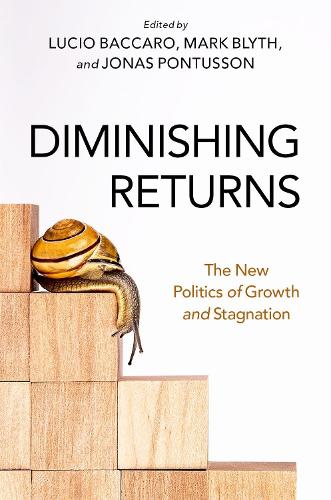
Diminishing Returns :The New Politics of Growth and Stagnation
paperback
Published:
21 November, 2022

Popular Books by Mark Blyth
View All Books by Mark Blyth
Description
More Details
| Type | Book |
|---|---|
| ISBN13 | 9780197607862 |
| ISBN10 | 0197607861 |
| Number Of Pages | 560 |
| Item Weight | 889 g |
| Product Dimensions | 233 x 157 x 37 mm |
| Publisher / Reseller | Oxford University Press Inc |
| Format | paperback |
Media Reviews
This immensely stimulating book enriches our understanding of comparative and international political economy with new perspectives drawn from post-Keynesian economics about how and why growth models vary across countries and time. Bringing macroeconomics back into the center of the study of comparative capitalism, the authors skillfully weave economics and politics together to yield a distinctive view of the challenges facing the contemporary world. This is an illuminating volume that all political economists will want to read. * Peter A. Hall, Krupp Foundation Professor of European Studies, Harvard University *
What happens when growth slows down? This excellent book contributes to a growing research agenda on economic growth, ranging from heterodox economics and international political economy to political science. At the core are institutional differences between national growth regimes that are interconnected in the global economy. Understanding those institutions and dynamics will allow us to better guide the transition from fossil-fuelled growth towards decarbonization. * Anke Hassel, Professor of Public Policy, Hertie School *
Every once in a while, a book comes along that genuinely takes the scholarly and analytical debates in a field forwards. This impressively substantial tome is just such a volume, enriching comparative capitalisms analysis in bringing together an array of the world's leading political economists to explore growth models and capitalist restructuring in many parts of the globe. This will become a landmark volume that students and scholars of the political economy interested in the politics of capitalist growth in all parts of the globe will need to read. * Ben Clift, Professor of Political Economy, University of Warwick *
GoodReads Reviews
Author's Bio
Lucio Baccaro is Director at the Max Planck Institute for the Study of Societies in Cologne. Mark Blyth is the William R. Rhodes '57 Professor of International Economics and Director of the Rhodes Center for International Economics and Finance at Brown University. Jonas Pontusson is Professor of Comparative Politics at the University of Geneva.