Islamic Ethics :Fundamental Aspects of Human Conduct
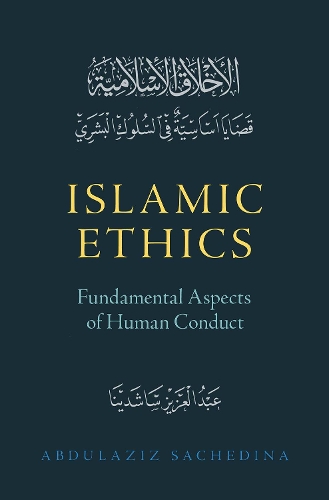
Islamic Ethics :Fundamental Aspects of Human Conduct
hardback
Published:
21 November, 2022

Popular Books by Abdulaziz Sachedina
View All Books by Abdulaziz Sachedina

Description
More Details
| Type | Book |
|---|---|
| ISBN13 | 9780197581810 |
| ISBN10 | 0197581811 |
| Number Of Pages | 224 |
| Item Weight | 544 g |
| Product Dimensions | 238 x 164 x 24 mm |
| Publisher / Reseller | Oxford University Press Inc |
| Format | hardback |
Media Reviews
Professor Sachedina's impressive magnum opus displays his deep and wide knowledge of Islamic ethical thought and practice. It illuminates several different views of the relations among theology, ethics, and law in Islam, while arguing for interpretive jurisprudence, which embodies ethics and draws on theology. I enthusiastically recommend this rich and important book. * James F. Childress, University Professor Emeritus, University of Virginia *
Abdulaziz Sachedina is a towering figure in Islamic ethics, and this is his masterpiece, the capstone to decades of rigorous study, observation, teaching, mentoring -- and disciplining himself to the demands of a jurist and scholar who embodies the best in his tradition. This treatise on 'fundamental aspects of human conduct' is at once a comprehensive overview and a penetrating analysis and interpretation of theological and juridical discourses in Islam, cast now within an ethical framework that illuminates the profound moral foundations of the Islamic legal tradition. It will quickly become required reading for all who seek to understand the inner logic of a vastly complex and evolving world religion. * R. Scott Appleby, Professor of History, University of Notre Dame *
Sachedina's work will prove useful both for scholars of Islamic law and for those working on constructive religious ethics. * Alla Alaghbri, The Journal of Religion *
Sachedina's work will prove useful both for scholars of Islamic law and for those working on constructive religious ethics. * Alla Alaghbri, The Journal of Religion *
Sachedina's display of past and present dynamics in Islamic jurisprudence, and the extent to which they meet the Qurānic ethical ideals, do remain at the ontological level within the subjectivist (traditionalist) camp. He does not wish to detach them from revelation. Only at the epistemological level, he sets things in motion through applying methods of juridical adaptation to significant changes in society in modern times. He justifies these adaptations by considering them rooted in the tradition, which he seeks to resuscitate and revive. * Mohammed Hashas, Journal of Islamic Ethics *
Author's Bio
Abdulaziz Sachedina is Professor and Endowed IIIT Chair in Islamic Studies at George Mason University in Fairfax, Virginia. He has been conducting research and writing in the field of Islamic Law, Ethics, and Theology (Sunni and Shiite) for more than four decades. In the last twenty years he has concentrated on social and political ethics, including Interfaith and Intrafaith Relations, Islamic Biomedical Ethics and Islam and Human Rights. He is the author of numerous books, most recently Islam and the Challenge of Human Rights (OUP, 2009).