Misfire :The Sarajevo Assassination and the Winding Road to World War I
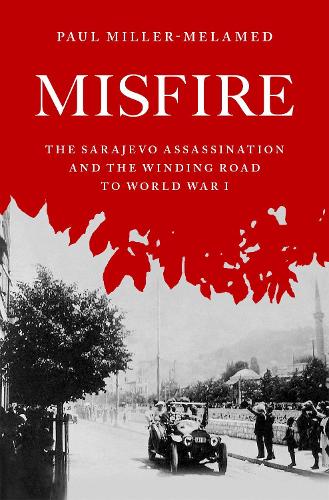
Misfire :The Sarajevo Assassination and the Winding Road to World War I
hardback
Published:
23 June, 2022

Description
More Details
| Type | Book |
|---|---|
| ISBN13 | 9780195331042 |
| ISBN10 | 0195331044 |
| Number Of Pages | 296 |
| Item Weight | 585 g |
| Product Dimensions | 239 x 164 x 24 mm |
| Publisher / Reseller | Oxford University Press Inc |
| Format | hardback |
Media Reviews
Miller-Melamed has done a service to the field with what should be a new point of departure for discussion of the diplomatic crisis that followed the Sarajevo assassination. * Choice *
Miller-Melamed aims to refocus narratives of war's outbreak in 1914 on substantive causes rather than on the inevitable responses to Franz Ferdinand's assassination. Drawing from a robust, multilingual array of scholarship and published sources, he situates the outbreak of war as unfolding in the capitals of Europe's great powers, not Sarajevo, because of a diplomatic misfire....[He] aims to show why southeastern Europe before 1914 should be understood as a site of a great power diplomatic conflict, why an assassination might take place there, and how the event should be understood as a tragedy rather than a reflection of regional or national backwardness....He rightly discards the tired narratives of inevitability or laundry list recitations that emphasize the centrality of one empire over others. Miller-Melamed has done a service to the field with what should be a new point of departure for discussion of the diplomatic crisis that followed the Sarajevo assassination. * Choice *
Misfire is without doubt a tremendously important addition to the 1914 literature. It is also, it has to be said, a stylishly written, absolutely entrancing work. In it, Miller-Melamed combines his agnosticism with massive erudition to demonstrate how the explanatory constructs in the narratives about the Sarajevo assassination in fact turn out to be, on closer inspection, no more than 'neat explanatory fiction'. This makes his book uniquely original in a sea of studies detailing the road to war....Misfire is certainly not just yet another account of how the war began. It is much, much more appealing and engaging than that: in showing how history can be so easily misconstrued and then widely transmitted, it is a striking reminder, and something of a reprimand, about how we end up processing the past through a mythological prism. * John Zametica, Balcanica: Annual of the Institute for Balkan Studies *
In this authoritative and meticulously researched book, renowned Balkan expert Paul Miller-Melamed argues that the death of the Archduke has been overly romanticised and that the mythology surrounding the plot has served to detract from a more considered understanding of why tensions in the Balkans escalated into a conflict which claimed approximately forty million lives. * Phil Curme, Stand To! *
Misfire is an interesting and valuable book... a rewarding read, richly detailed, well researched and argued. * Gary Sheffield, The Critic *
Miller-Melamed's compelling account of the assassination at Sarajevo in 1914 is a welcome addition to the literature on the outbreak of the Great War. Turning myth into history, Miller shows that the men responsible for the outbreak of war were not assassins, but prime ministers, foreign ministers, and generals who turned one crime into the justification for another, greater, crime we know as the First World War. * Jay Winter, Yale University *
Paul Miller-Melamed asks why Gavrilo Princip is mythologized as a pivotal figure in world history when it was the actions of others which brought about war in 1914. This fresh, engaging retelling of a familiar story highlights the extent and longevity of the 'Sarajevo myths' and paints a vivid portray of the assassin, his victims, and their different, yet similar, worlds which collided on 28 June 1914 * Annika Mombauer, The Open University *
The story of the assassination of Franz-Ferdinand has been so often told that most now assume to know what 'Sarajevo, 1914' was and meant. Miller-Melamed's compelling narrative, steeped in his masterful and nuanced command of the scholarly literature, show how little those events are understood to this day. Misfire's retelling shows the characters in this plot should not be dismissed as bit-part actors in the wider drama of the First World War. Neither should the Balkans be treated as a peripheral backwater of Europe when its politics and peoples played a critical role in shaping modern Europe as we know it. Misfire is a remarkable demonstration of the craft of historical writing. Anyone with a keen interest in history, not merely World War I historians, will thoroughly enjoy this book and learn a great deal from it. * Pierre Purseigle, University of Warwick *
An engrossing examination of how World War I began, how it is remembered, and the differences between the two, Misfire does not complicate the story of World War I's origins; rather, it serves as a reminder that history is always more complicated than its mythmakers and storytellers suggest. * Eileen Gonzalez, Foreword Reviews *
What can only be touched on in Miller-Melamed's stimulating study is the even broader question of what the meaning of events in historical narratives lies. * Günther Kronenbitter, Redaktion sehepunkte *
GoodReads Reviews
Author's Bio
Paul Miller-Melamed teaches history at the John Paul II Catholic University of Lublin in Poland and McDaniel College in the United States. He is the author of From Revolutionaries to Citizens: Antimilitarism in France, 1870-1914 and the co-editor of Embers of Empire: Continuity and Rupture in the Habsburg Successor States after 1914.