The Causes of Molecular Evolution - Oxford Series in Ecology and Evolution
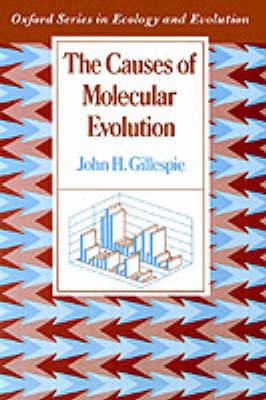
The Causes of Molecular Evolution - Oxford Series in Ecology and Evolution
paperback
Published:
8 September, 1994
paperback
Published:
8 September, 1994

Standard worldwide delivery by
Wed, August 5 - Mon, August 10
Order within
0
Popular Books by Gillespie
View All Books by Gillespie








Description
This work provides a unified theory that addresses the important problem of the origin and maintenance of genetic variation in natural populations. With modern molecular techniques, variation is found in all species, sometimes at astonishingly high levels. Yet the forces that maintain variation within and between species have been difficult subjects of study. Because they act very weakly and operate over vast time scales, scientists must rely on indirect inferences and speculative mathematical models. The author's research in molecular genetics, evolution, and bio-mathematics has enabled him to draw on his work, and present a coherent and valuable view of the field. The book is divided into three parts. The first addresses protein evolution, DNA evolution, and molecular mechanisms, reviewing the experimental observations on genetic variation. The second gives a unified treatment of the mathematical theory of selection in a fluctuating environment. The final section combines the earlier assessments in a treatment of the scientific status of two competing theories for the maintenance of genetic variation.
More Details
| Type | Book |
|---|---|
| ISBN13 | 9780195092714 |
| ISBN10 | 0195092716 |
| Number Of Pages | 352 |
| Item Weight | 513 g |
| Product Dimensions | 231 x 156 x 20 mm |
| Publisher / Reseller | Oxford University Press Inc |
| Format | paperback |
See More +
Media Reviews
'I like this book, and it is valuable to have many elements of the debate under one cover ... this is a timely contribution which will promote interest in the study of adaptation at the molecular level.' Nature, Vol. 359, September 1992
'John Gillespie provides the first thorough assessment of the success of selectionist and neutralist arguments in explaining the data on genetic variation.' Times Higher Education Supplement