Nativism and Slavery :The Northern Know Nothings, and the Politics of the 1850s
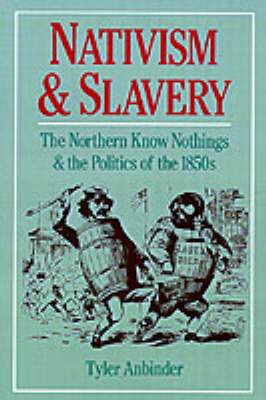
Nativism and Slavery :The Northern Know Nothings, and the Politics of the 1850s
hardback
Published:
18 February, 1993
hardback
Published:
18 February, 1993

Standard worldwide delivery by
Thu, July 16 - Tue, July 21
Order within
0
Popular Books by Tyler Anbinder
View All Books by Tyler Anbinder
Description
Political protest against immigrants has come to a head several times in American history. The most famous and influential such protest was exemplified by the Know-Nothing Party, founded in 1854 and directed especially against Catholic immigrants. By the end of 1855 the party had elected eight governors, over one hundred Congressmen, and thousands of local officials. Prominent politicians of every persuasion joined the party, which then changed its name to the American Party. It became a major element in the new Republican Party, which first produced a presidential candidate in 1856. The party and its influence has not attracted much attention from historians, because the events involved in the coming of the Civil War eclipsed interest in a movement that was only peripherally involved with Civil War issues. The Know-Nothings had a precipitous decline, starting with the 1856 election, at which their presidential candidate Millard Fillmore carried only one state. The Republican Party soon eclipsed it, too. Tyler Anbinder has written the first comprehensive history of the Know-Nothings, and his book represents a major revision of historiography in the years leading up to the Civil War.
More Details
| Type | Book |
|---|---|
| ISBN13 | 9780195072334 |
| ISBN10 | 0195072332 |
| Number Of Pages | 352 |
| Item Weight | 767 g |
| Product Dimensions | 161 x 242 x 27 mm |
| Publisher / Reseller | Oxford University Press Inc |
| Format | hardback |
See More +
Media Reviews
James McPherson of Princeton comments: "The book ... adds an important dimension to the historiographical debate over the relationship between nativism, slavery, the breakdown of the second party system, and the origins of the Republican Party ... Anbinder convincingly puts the slavery issue back into its central role in breaking down the second party system."