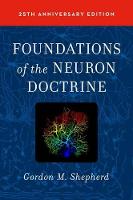
Foundations of the Neuron Doctrine - History of Neuroscience
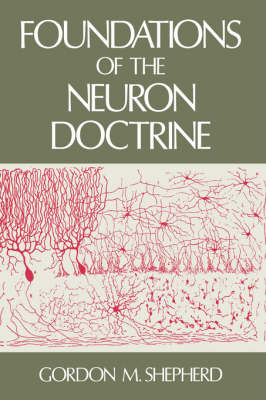
Foundations of the Neuron Doctrine - History of Neuroscience
hardback
Published:
6 February, 1992
hardback
Published:
6 February, 1992

Standard worldwide delivery by
Mon, August 3 - Thu, August 6
Order within
0
Popular Books by Gordon M. Shepherd
View All Books by Gordon M. Shepherd
Description
For a century, the neuron doctrine has been the basis for our concepts of nervous organization and brain function, stating that the cell theory applies to the nervous system. Santiago Ramon y Cajal, Spain's greatest scientist, was its main architect; his main tool being a capricious nerve cell stain discovered by Camillo Golgi. This book reviews the original papers on which the neuron doctrine was based, showing that the evidence came from such contributors as Albrecht Kolliker, Sigmund Freud, Wilhelm His, August Forel, Fritdjof Nansen and Gustav Retzius. Many questions were raised which remain relevant today. Electron microscopical studies in the 1950s appeared to confirm the classical doctrine but subsequent studies revealed unsuspected complexities. This book reviews the new studies against the classical work and suggests new directions for revising our concept of the neuron as a basis for the functional organization of the nervous system.
More Details
| Type | Book |
|---|---|
| ISBN13 | 9780195064919 |
| ISBN10 | 0195064917 |
| Number Of Pages | 352 |
| Item Weight | 671 g |
| Product Dimensions | 152 x 229 x 24 mm |
| Publisher / Reseller | Oxford University Press Inc |
| Format | hardback |
See More +
Media Reviews
The excerpts from original articles and Shepherd's scholarly comment give a balanced and orderly history of the evidence for the neuron doctrine from the earliest discoveries to its final triumph in the hands of the Spanish histologist Ramön y Cajal. Shepherd's treatment of the reticular theorists is particularly helpful. The book is of interest and importance for anyone interested in the history of the nervous system. The book is essential for every library which covers the history of biology or medicine, and a pleasure for those of us interested in the nervous system. * Mitchell Glickstein, University College, London, Medical History, 1992, 37 *