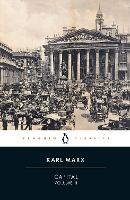
Capital :Volume III - Capital
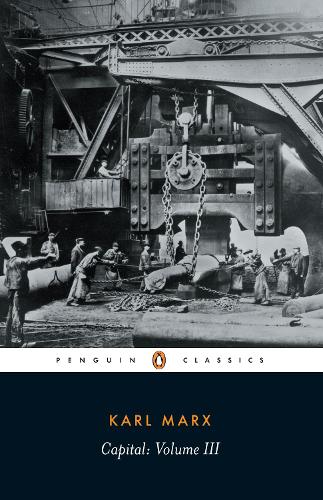
Capital :Volume III - Capital
paperback | English
Published:
27 August, 1992

Popular Books by Karl Marx
View All Books by Karl Marx


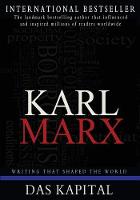
Description
More Details
| Type | Book |
|---|---|
| ISBN13 | 9780140445701 |
| ISBN10 | 0140445706 |
| Number Of Pages | 1088 |
| Item Weight | 787 g |
| Product Dimensions | 128 x 197 x 62 mm |
| Publisher / Reseller | Penguin Books Ltd |
| Format | paperback |
| Edition | 3rd edition |
GoodReads Reviews
Author's Bio
Karl Marx was born in 1818 in Trier, Germany and studied in Bonn and Berlin. Influenced by Hegel, he later reacted against idealist philosophy and began to develop his own theory of historical materialism. He related the state of society to its economic foundations and mode of production, and recommended armed revolution on the part of the proletariat. Together with Engels, who he met in Paris, he wrote the Manifesto of the Communist Party. He lived in England as a refugee until his death in 1888, after participating in an unsuccessful revolution in Germany.
Ernst Mandel was a member of the Belgian TUV from 1954 to 1963 and was chosen for the annual Alfred Marshall Lectures by Cambridge University in 1978. He died in 1995 and the Guardian described him as 'one of the most creative and independent-minded revolutionary Marxist thinkers of the post-war world.'
Translated by David Fernbach with an introduction by Ernest Mandel