Selected Poems: Keats
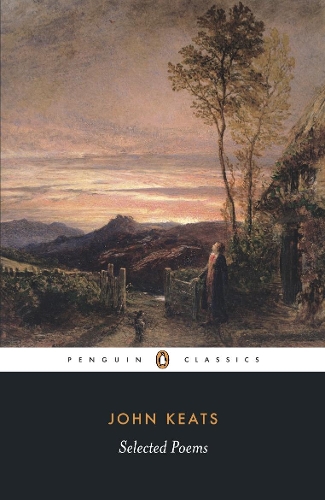
Selected Poems: Keats
paperback
Published:
26 April, 2007
paperback
Published:
26 April, 2007

Standard worldwide delivery by
Tue, July 28 - Fri, July 31
Order within
0
Popular Books by John Keats
View All Books by John Keats
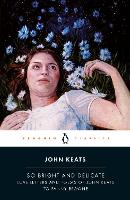
Description
Over the course of his short life, John Keats (1795-1821) honed a raw talent into a brilliant poetic maturity. By the end of his brief career, he had written poems of such beauty, imagination and generosity of spirit, that he had - unwittingly - fulfilled his wish that he should ‘be among the English poets after my death’. This wide-ranging selection of Keats’s poetry contains youthful verse, such as his earliest known poem ‘Imitation of Spenser’; poems from his celebrated collection of 1820 - including ‘Lamia’, ‘Isabella’, ‘The Eve of St Agnes’, ‘Ode to a Nightingale’ and ‘Hyperion’ - and later celebrated works such as ‘La Belle Dame sans Merci’. Also included are many poems considered by Keats to be lesser work, but which illustrate his more earthy, playful side and superb ear for everyday language.
More Details
| Type | Book |
|---|---|
| ISBN13 | 9780140424478 |
| ISBN10 | 0140424474 |
| Number Of Pages | 320 |
| Item Weight | 234 g |
| Product Dimensions | 128 x 197 x 19 mm |
| Publisher / Reseller | Penguin Books Ltd |
| Format | paperback |
See More +
GoodReads Reviews
Author's Bio
John Keats was born in October 1795. In October 1816 he met Leigh Hunt, whose Examiner had already published Keats’s first poem. Only seven months later Poems (1817) appeared. The extraordinary speed with which Keats matured is evident from his letters. In 1818 he had worked on the powerful epic fragment Hyperion, and in 1819 he wrote ‘The Eve of St Agnes’, ‘La Belle Dame sans Merci’, the major odes, Lamia, and the deeply exploratory Fall of Hyperion. Keats was already unwell when preparing the 1820 volume for the press; by the time it appeared in July he was desperately ill. He died in Rome in 1821.
Edited with an introduction and notes by John Barnard.