The Common Marmoset in Captivity and Biomedical Research - American College of Laboratory Animal Medicine
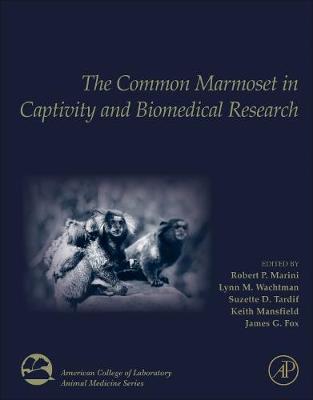
The Common Marmoset in Captivity and Biomedical Research - American College of Laboratory Animal Medicine
hardback
Published:
19 November, 2018

Popular Books by Keith Mansfield
View All Books by Keith Mansfield
Description
More Details
| Type | Book |
|---|---|
| ISBN13 | 9780128118290 |
| ISBN10 | 0128118296 |
| Number Of Pages | 570 |
| Item Weight | 1740 g |
| Publisher / Reseller | Elsevier Science Publishing Co Inc |
| Format | hardback |
Media Reviews
"This book is the result of an international effort, and it provides an in-depth review of the common marmoset including numerous excellent illustrations, particularly in the anatomy and neuroanatomy sections. ...This book will be an invaluable reference for colony managers, veterinarians, behaviorists, and investigators involved in the care, propagation, and research application of common marmosets. Moreover, the value of this book extends beyond the biomedical research community because its contents cover the broad topic of the natural history of common marmosets, which will be of interest to the zoological and conservation communities as well." --Journal of the American Veterinary Medical Association
Author's Bio
Robert P. Marini, DVM, DACLAM, Assistant Director, is a member of MIT’s Division of Comparative Medicine’s clinical staff and is Chief of the Division’s clinical surgical facilities. Dr. Marini is responsible for coordinating and supervising all major survival surgery in non-rodent mammalian species. Harvard Medical School, Boston MA USA Suzette D. Tardif, Ph.D., is the Associate Director of Research at the Southwest National Primate Research Center. She is an adjunct faculty of The Barshop Institute. The Tardif laboratory's activities center on the development of the marmoset monkey as a disease model. Dr. Tardiff is a past-President of the American Society of Primatologists. Keith Mansfield is Associate Director for Resource and Collaborative Affairs and Chair, Division of Primate Resources, New England National Primate Research Center, Harvard Medical School, Harvard University, Southborough, US. His research focuses on primarily on the recognition of spontaneously occurring infectious diseases of nonhuman primates and their development into novel animal models to investigate disease pathogenesis. Prof. James G. Fox obtained his Doctor of Veterinary Medicine at Colorado State University, Fort Collins, and, as an NIH postdoctoral fellow, received a Master of Science in Medical Microbiology at Stanford University. Dr. Fox is an adjunct professor at Tufts University School of Veterinary Medicine. He is a diplomate and a past president of the American College of Laboratory Animal Medicine, as well as a past president of the Massachusetts Society for Medical Research and the American Association of Veterinary Medical Colleges. Additionally, he has served as past chairman of the AAALAC Council and the NCCR/NIH Comparative Medicine Study Section. He is also an elected fellow of the Infectious Disease Society of America and the American Gastroenterological Association. He was recruited to MIT and created the Division of Comparative Medicine, which he directed from 1974 until 2021. As a faculty member in the MIT Department of Biological Engineering, Professor Fox received numerous scientific awards and was elected to the National Academy of Medicine in 2004. Dr. Fox has been the principal investigator of an NIH postdoctoral training grant for veterinarians for 30 years and has trained 90 veterinarians for careers in biomedical research. The NIH has continuously funded him to study infectious diseases of the gastrointestinal tract, where he has studied the gastrointestinal microbiome and how it interfaces with and influences the host’s immune response to gastrointestinal pathogens, particularly oncogenic Helicobacter species. He has authored over 600 papers, 84 chapters, holds 4 patents and has authored or edited 18 comparative medicine texts.