Islands in the Stream
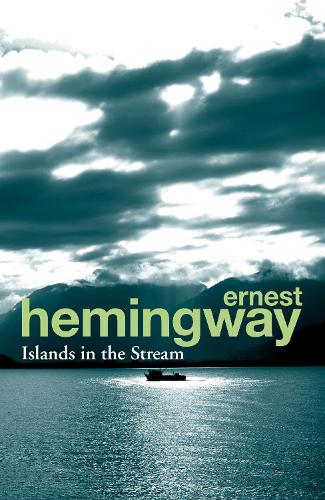
Islands in the Stream
paperback
Published:
2 May, 2013

Popular Books by Ernest Hemingway
View All Books by Ernest Hemingway
Description
______________________________________
Hemingway’s last major novel, set in the Gulf Stream islands, captures the struggles of adult personal relationships in his consummate distinctive style.
This is the last book Hemingway wrote before he died, the story of Thomas Hudson, an artist and adventurer. Living a bachelor's life on an island in the Gulf Stream during the thirties, Hudson's existence is dictated by the waves and tides. But when his sons come to visit, Hudson must grapple with the role of father and the unfamiliar demands of family.
A late work by one of America's greatest writers.
More Details
| Type | Book |
|---|---|
| ISBN13 | 9780099586630 |
| ISBN10 | 0099586630 |
| Number Of Pages | 464 |
| Item Weight | 328 g |
| Product Dimensions | 130 x 196 x 30 mm |
| Publisher / Reseller | Cornerstone |
| Format | paperback |
Media Reviews
Hemingway's most deeply autobiographical piece of work * Irish Times *
Hemingway’s style is a superb vehicle for revealing tenderness of feeling beneath descriptions of brutality * Guardian *
Many of the episodes contain the most exciting and effective writing Hemingway has ever done * Saturday Review *
This book contains some of the best of Hemingway's descriptions of nature: the waves breaking white and green on the reef off the coast of Cuba; the beauty of the morning on the deep water; the hermit crabs and land crabs and ghost crabs; a big barracuda stalking mullet; a heron flying with his white wings over the green water; the ibis and flamingoes and spoonbills, the last of these beautiful with the sharp rose of their color; the mosquitoes in clouds from the marshes; the water that curled and blew under the lash of the wind; the sculpture that the wind and sand had made of a piece of driftwood, gray and sanded and embedded in white, floury sand -- Edmund Wilson * Saturday Review *
Thomas Hudson, the painter in the book Islands in the Streamis Hemingway himself, attempting to come to terms with everything he loves - the clarity of a brushstroke, his three children, his ex-wives, his lovers, his whores, his friends, his cats, his rifle, his Booth's gin * Newsweek *
Many of the episodes contain the most exciting and effective writing Hemingway has ever done. -- John W. Aldridge * Saturday Review *
This book contains some of the best of Hemingway's descriptions of nautre: the waves breaking white and green on the reef off the coast of Cuba; the beauty of the morning on the deep water; the hermit crabs and land crabs and ghost crabs; a big barracuda stalking mullet; a heron flying with his white wings over the green water; the ibis and flamingoes and spoonbills, the last of these beautiful with the sharp rose of their color; the mosquitoes in clouds from the marshes; the water that curled and blew under the lash of the wind; the sculpture that the wind and sand had made of a piece of driftwood, gray and sanded and embedded in white, floury sand. -- Edmund Wilson * Saturday Review *
GoodReads Reviews
Author's Bio
Ernest Miller Hemingway was born in Chicago in 1899, the son of a doctor and the second of six children. After a stint as an ambulance driver at the Italian front, Hemingway came home to America in 1919, only to return to the battlefield – this time as a reporter on the Greco-Turkish war – in 1922. Resigning from journalism to focus on his writing instead, he moved to Paris where he renewed his earlier friendship with fellow American expatriates such as Ezra Pound and Gertrude Stein. Through the years, Hemingway travelled widely and wrote avidly, becoming an internationally recognized literary master of his craft. He received the Nobel Prize for Literature in 1954, following the publication of The Old Man and the Sea. He died in 1961.