Satan in Goray
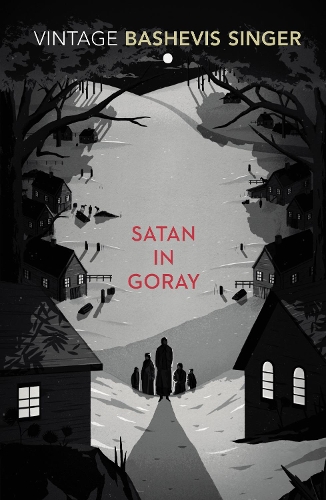
Satan in Goray
paperback
Published:
7 December, 2000

Popular Books by Isaac Bashevis Singer
View All Books by Isaac Bashevis Singer







Description
More Details
| Type | Book |
|---|---|
| ISBN13 | 9780099285472 |
| ISBN10 | 0099285479 |
| Number Of Pages | 208 |
| Item Weight | 153 g |
| Product Dimensions | 130 x 198 x 14 mm |
| Publisher / Reseller | Vintage Publishing |
| Format | paperback |
Media Reviews
A gripping parable of reason versus revelation, hysteria in the face of apocalypse * Guardian *
Whatever religion his writing inhabits, it is blazing with life and actuality -- Ted Hughes * New York Review of Books *
Singer set scenes with such vividness that there is almost a smell to his books, the smell of poverty and guttering candles and decaying lives and decaying souls * Observer *
His storytelling powers are so immense, so natural. He has more creative confidence than any living writer * Financial Times *
A remarkably confident debut... Singer was a great writer who managed to make that small world take on universal significance * Guardian *
The richness of Singer's evocation and the ambiguity of his art set the novel apart from pure political satire * New Yorker *
GoodReads Reviews
Author's Bio
Isaac Bashevis Singer was born in 1904, in Poland, the son of a rabbi. Fleeing fascism in 1935, he emigrated to America, penniless and knowing little English. 'I think that the whole of human history is one big Holocaust,' he said in 1987, when asked why there was no direct mention of the Holocaust in his fiction. 'It is not only Jewish history. We can call human history the history of the human Holocaust'. Singer's fiction - novels such as The Family Moskat (1950) and The Magician of Lublin (1960), and story collections such as Gimpel the Fool (1957) and The Spinoza of Market Street (1961) - became admired internationally and he was awarded the Nobel prize in 1978. He died in 1998.