Biography
Despite being famous for novels such as Far From The Madding Crowd, The Mayor Of Casterbridge and Tess Of The D’Urbervilles, Victorian Thomas Hardy considered himself a poet, and is buried in Westminster Abbey’s Poets Corner. Born in 1840 in Dorset, Hardy was an intelligent child who received a formal education until he was 16 years old. With the family unable to afford university, he was apprenticed to a local architect, and moved to London in 1862 to further his career. Despite finding success in the capital - he won prizes from the Royal Institute Of British Architects and the Architectural Association - he never felt at home in London because of the strict class divisions. It was during this time that he became interested in social reform, and became friends with many liberal thinkers. Inspired by the works of these freethinkers, he returned to Dorset determined to become a writer himself.
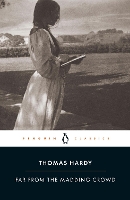
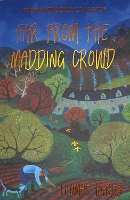
His first novel, The Poor Man & The Lady, was considered too controversial, and his friends advised him against publishing it. His next two attempts, Desperate Remedies (1871) and Under The Greenwood Tree (1872) were published anonymously. In the following year, he published his first novel under his own name, A Pair Of Blue Eyes, which was well received by critics, but it was his next novel, Far From The Madding Crowd, published in 1874, that would bring him to widespread attention.
Depicting the often harsh realities of life in rural England, it’s a tale of love, honour, betrayal, forgiveness and redemption that also explores social dynamics, class structures and the role of women in society. An immediate success, it sold so many copies he was able to give up his architectural work to concentrate on writing full time. He went on to publish 10 more novels. In 1898, he published his first collection of poems, the first of nine volumes that dealt with issues of love, loss, fate and war.
Vivid and compelling, Thomas Hardy’s novels offer an insight into the realities of the everyday struggles of ordinary people in Victorian England, challenging the conventional morals of the time in a way that is still relevant today.