Postcolonial Slavic Literatures After Communism - Postcolonial Perspectives on Eastern Europe
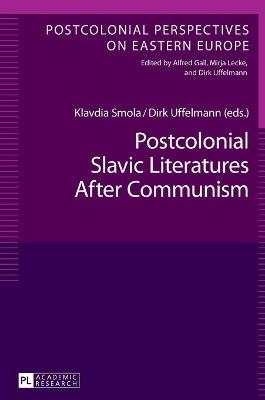
Postcolonial Slavic Literatures After Communism - Postcolonial Perspectives on Eastern Europe
hardback
Published:
6 February, 2017

Popular Books by Mirja Lecke
View All Books by Mirja Lecke
Description
How postcolonial are the literatures of postcommunist countries such as Poland, Russia, and Ukraine? Are they postcolonial on the level of sociopolitical conditions, postcolonial modes of representation, or of a (post-)colonial mind? The contributors consider and respond to the heuristic questions and to the claim for accuracy which purports that Slavic literatures after communism are indeed postcolonial – in a no more metaphorical way than the «classic» cases of postcolonial literatures, whose postcoloniality can be traced to the colonialism of overseas empires. The contributions to this volume deal with the exploration of literary representation and hence of postcolonial textuality.
More Details
| Type | Book |
|---|---|
| ISBN13 | 9783631668566 |
| ISBN10 | 3631668562 |
| Number Of Pages | 504 |
| Item Weight | 730 g |
| Publisher / Reseller | Peter Lang AG |
| Format | hardback |
| Edition | New edition |
Media Reviews
«Sceptics and partisans alike should look into this intellectually adventurous book.»
(Susan Layton, The Russian Review Vol.77 No. 2 2018)
Author's Bio
Klavdia Smola is Visiting Professor in the Department of Slavic Studies at the University of Greifswald. Her scholarly interests include Eastern-European-Jewish culture, Russian and Polish literatures of the 19th-21st centuries, postcolonial literatures in Eastern Europe, and late-Soviet underground culture.
Dirk Uffelmann is Professor of Slavic Literatures and Cultures at the University of Passau. His research interests are Russian, Polish, Czech, Slovak, Ukrainian, and Central-Asian literatures, philosophy, religion, migration, masculinity, and Internet studies.