Collected Poems :Volume II 1939-1962
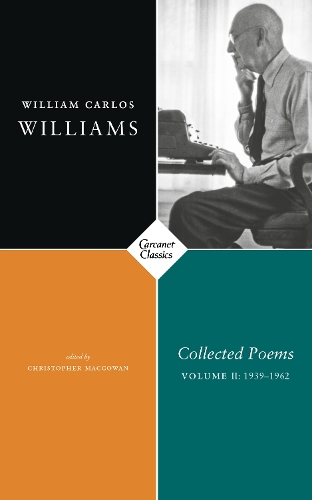
Collected Poems :Volume II 1939-1962
paperback
Published:
27 June, 2019

Popular Books by William Carlos Williams
View All Books by William Carlos Williams

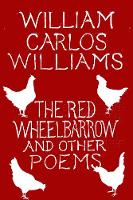
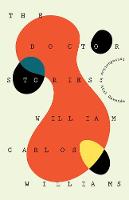
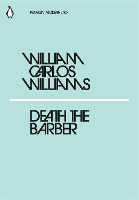
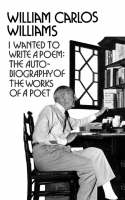
Description
More Details
| Type | Book |
|---|---|
| ISBN13 | 9781784108441 |
| ISBN10 | 1784108448 |
| Number Of Pages | 576 |
| Item Weight | 1000 g |
| Publisher / Reseller | Carcanet Press Ltd |
| Format | paperback |
| Edition | 2nd edition |
Media Reviews
excerpt from 'Chicory and Daisies' by Stephen Burt in
The London Review of Books 7 March 2002
[...] 'What Williams sees, he sees in a flash,' his friends Kenneth Burke remarked in 1922, calling him 'the master of the glimpse': Williams mastered not only the flash and the glimpse but their aural equivalents, the bit of dialogue or monologue which,arranged as verse, illuminates not a scene but a speech and its speaker. 'I've met a hell of a lot of all kinds of people that you'll ever get your eyes on,' Williams said reproachfully to Pound in 1938, 'and I've know them inside and out in ways you'll never know.'Medicine offered him access of a sort that few major poets have had to different registers of speech and kinds of life: he used what he learned, and what he overheard, in striking short stories and in remarkable talk-based poems. [...]
excerpt from 'poetry review' by Tom Leonard in
City Limits 27 May 1989
[...] The 'Collected Poems', now published in two volumes, adds more than 170 title to those previously available in book form, and lets the reader for the first time chart the development of Williams's style, the chronology of the work from 1909 to 1962 being now made clear.In addition to the original poems, there are more than 70 previously uncollected translations; again, Volume One contains many comments by Williams printed for the first time.These are very important and exciting publications. [...]But there are many strands to the work of this most affirmative of the major 20th century poets.If you can't afford these two volumes, make sure your local public library gets a request for them.
excerpt from 'Doctor on the table' by Robert Nye in
The Times 6 May 1989
Carlossness: the craft of careful carelessness, allegedly American to the core and once believed (by chaps called Black Mountaineers) to represent the only true voice of feeling; not to be confused with real spontaneity.The book that can contain a definition like this has not yet been written, but it will, one way or another - which is to express the opinion, no more, that William Carlos Williams will eventually be seen as a necessary part of the history of modern poetry, rather much of a poet in his own right.
The gentle doctor, busy, breathless, easy, and domestic, became the GP who would set things right - away with these self-loving eclectics, "no ideas but in things"! As a programme for the early 20th century literary scene, it had appeal.Williams was a healthy reactor against the cultural artfulness of Pound and Eliot, a breath of fresh New Jersey air in the cosmopolitan wasteland.His energy and purpose still seem admirable.One's reservations are rooted in awareness of just how much he owed to the masters he disowned.
excerpt from 'With the bare hands' by Mark Ford in
The Times Literary Supplement 19-25 May 1989
[...] Although Williams despised Eliot and Pound, and even Henry James, for their fastidious rejections of the vulgarities of America, his own diagnosis of the American condition was hardly optimistic. "The pure products of America / go crazy -" is probably the most famous of his clear-eyed analyses of national inarticulacy, while Paterson is his most extended and historically conscious approach to this theme.A large percentage of all his poems, though, however truncated or random in detail, also subliminally express the complex nature of social forces in action.Without ever losing sight of the imagist tenets he embraced as a young man, Williams developed the possibilities of "direct treatment of the thing" away from the crystalline inconsequence of Pound and Hulme into a poetry capable of being at once anti-symbolic and forcefully representative at the same time [...]
[...] Williams was quite happy to live in disregard of notion of the perfect, which he saw as a European affliction.The virtues most of these poems celebrate are the most humble ones of continuity and persistence.In another poem from Journey to Love he compares himself to the pink locust flower, a tenacious self-propagator: "once admitted / to the garden, / you will not easily get rid of it".The scope and variety of this second volume of Collected Poems makes his self-assessment at the end of the poem look modestly just:
I am not / I know / in the galaxy of poets / a rose / but who, among the rest / will deny me / my place.
excerpt from an untitled review by Michael Horowitz
(source unknown)
[...] Much as the teenage Picasso could draw like Raphael, but came to do a whole lot else, so came Williams to apply all his consummate facilities for rhyme, reason, metrics, music and realism to the challenges and delights and communications of a more complex, serious game than just showing them off.Consider 'Construction', from 1961: 'on the sidewalk / in front of the funeral / home // where the high / school kids gather / at night // there was a used / condom squashed / flat'.It's not tennis, Denis - but it sure as hell is poetry, every word in its place and never one too many - a vision, of and for our time, all time.Jump the inhibiting nets, if you will, and the immaterial backwash of what Blake saw as 'the Sea of Error' because it (the Atlantic) separates Albion from the new world - as Thom Gunn for one has managed, to see this book (with its companion volume) as 'an ideal edition' of a matchless verbal artist-inventor. [...]
GoodReads Reviews
Author's Bio
William Carlos Williams (1883-1963), a great contemporary of Pound, H.D., Wyndham Lewis and others, is one of the fathers of American free verse. Born in Rutherford, New Jersey, he received his M.D. from the University of Pennsylvania, where he met and befriended Ezra Pound. Returning to Rutherford, where he sustained his medical practice throughout his life, Williams began publishing in small magazines and embarked on a prolific career as a poet, novelist, essayist, and playwright.