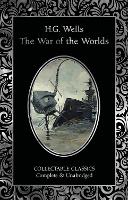
The War of the Worlds - S.F. Masterworks
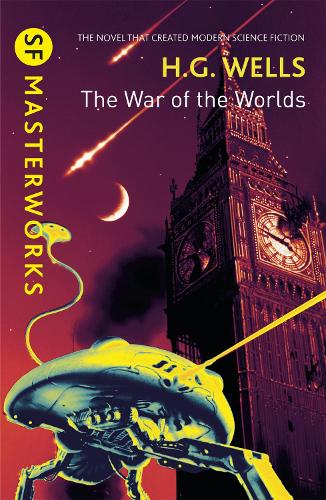
The War of the Worlds - S.F. Masterworks
paperback
Published:
12 January, 2017

Popular Books by H.G. Wells
View All Books by H.G. Wells




Description
'No one would have believed in the last years of the nineteenth century that this world was being watched keenly and closely by intelligences greater than man's...'
So begins H. G. Wells' classic novel in which Martian lifeforms take over planet Earth. As the Martians emerge, they construct giant killing machines - armed with heatrays - that are impervious to attack. Advancing upon London they destroy everything in their path. Everything, except the few humans they collect in metal traps.
Victorian England is a place in which the steam engine is state-of-the-art technology and powered flight is just a dream. Mankind is helpless against the killing machines from Mars, and soon the survivors are left living in a new stone age.
More Details
| Type | Book |
|---|---|
| ISBN13 | 9781473218024 |
| ISBN10 | 1473218020 |
| Number Of Pages | 208 |
| Item Weight | 184 g |
| Product Dimensions | 201 x 162 x 18 mm |
| Publisher / Reseller | Orion Publishing Co |
| Format | paperback |
Media Reviews
Groundbreaking ... A true classic that has pointed the way not just for science-fiction writers, but for how we as a civilisation might think of ourselves * GUARDIAN *
[Wells' work is] astonishingly rich in human and historical interest ... he foresaw the invention of, among other things, television, tanks, aerial warfare and the atom bomb -- David Lodge
I personally consider the greatest of English living writers [to be] H. G. Wells -- Upton Sinclair
GoodReads Reviews
Author's Bio
H.G. Wells was born in Bromley, Kent in 1866. After working as a draper's apprentice and pupil-teacher, he won a scholarship to the Normal School of Science in 1884, studying under T. H. Huxley. He was awarded a first-class honours degree in biology and resumed teaching but had to retire after a kick from an ill-natured pupil afflicted his kidneys. He worked in poverty in London as a crammer while experimenting in journalism and stories. It was with THE TIME MACHINE (1895) that he had his real breakthrough.