
1.38Kg of CO2

172 litre(s) of Water

0.0103 Tree(s)

1 book donated to global literacy projects
Unaging :The Four Factors that Impact How You Age
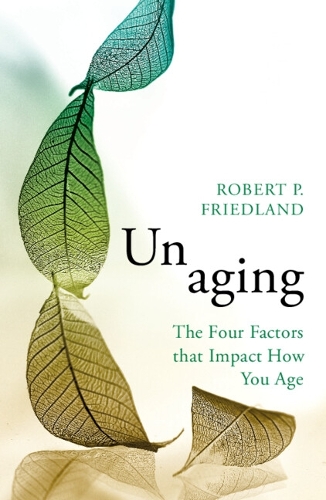
Unaging :The Four Factors that Impact How You Age
paperback
Published:
20 October, 2022


Description
More Details
| Type | Book |
|---|---|
| ISBN13 | 9781009087742 |
| ISBN10 | 1009087746 |
| Number Of Pages | 344 |
| Item Weight | 390 g |
| Product Dimensions | 130 x 197 x 20 mm |
| Publisher / Reseller | Cambridge University Press |
| Format | paperback |
Media Reviews
''One excellent way to improve memory is through stories', Prof. Friedland states in his book. And this book is not short of stories about our own, human, story. These enjoyable and informative stories stem from Prof. Friedland's vast clinical and neuroscience experience, shared in an entertaining and yet highly scientific manner. He encourages us to be an active participant in our own care and fierce in the pursuit of what's best for us and our health. In unrevealing the complex story of ageing and demystifying the ageing process, we are served with simple, scientifically based tips how to un-age. Please use them throughout your own (ageing) life and build your own stories each day.' Elizabeta Mukaetova-Ladinska, University of Leicester
'[A] comprehensive health guide to maintaining fitness in mind and body through the decades.' Diane Cole, A Wall Street Journal Best Book about Aging and Retirement
'Unaging is a beautiful capstone to the demonstration of chronic disease as modifiable by our choices, and not inevitable. Friedland writes with great authority as one of the first to research physical and mental determinants, microbiome, and minority disparities. … In an age so reliant on costly drugs and risky interventions, Friedland's message is all the more needed by medical professionals, their patients, and those wanting to avoid being patients.' George Perry, Journal of Alzheimer's Disease
Author's Bio
Robert Friedland MD is a neurologist and the Rudd endowed professor of Neurology and Neurobiology at the University of Louisville School of Medicine in Kentucky. He previously worked at the University of California, Berkeley, the US National Institute on Aging and Case Western Reserve University. Recently his research has uncovered a key role of intestinal bacteria in the initiation and progression of Alzheimer's disease, Parkinson's disease and amyotrophic lateral sclerosis. His studies of humans and animals in the US, Japan, the Middle East and Kenya have helped to advance the concept that the risk of aging-related brain diseases can be lowered through our personal actions.