After the Rubicon :Congress, Presidents, and the Politics of Waging War - Chicago Series on International and Domestic Institutions
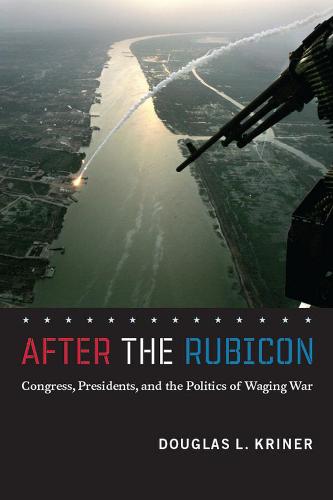
After the Rubicon :Congress, Presidents, and the Politics of Waging War - Chicago Series on International and Domestic Institutions
paperback
Published:
23 December, 2010
paperback
Published:
23 December, 2010

Standard worldwide delivery by
Tue, June 23 - Fri, June 26
Order within
0
Popular Books by Douglas L. Kriner
View All Books by Douglas L. Kriner
Description
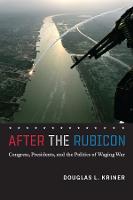
When the United States goes to war, the nation's attention focuses on the president. As commander in chief, a president reaches the zenith of power, while Congress is supposedly shunted to the sidelines once troops have been deployed abroad. Because of Congress's repeated failure to exercise its legislative powers to rein in presidents, many have proclaimed its irrelevance in military matters. After the Rubicon challenges this conventional wisdom by illuminating the diverse ways in which legislators influence the conduct of military affairs. Douglas L. Kriner reveals that even in politically sensitive wartime environments, individual members of Congress frequently propose legislation, hold investigative hearings, and engage in national policy debates in the public sphere. These actions influence the president's strategic decisions as he weighs the political costs of pursuing his preferred military course. Marshalling a wealth of quantitative and historical evidence, Kriner expertly demonstrates the full extent to which Congress materially shapes the initiation, scope, and duration of major military actions and sheds new light on the timely issue of interbranch relations.
More Details
| Type | Book |
|---|---|
| ISBN13 | 9780226453569 |
| ISBN10 | 0226453561 |
| Number Of Pages | 336 |
| Item Weight | 510 g |
| Product Dimensions | 16 x 23 x 2 mm |
| Publisher / Reseller | The University of Chicago Press |
| Format | paperback |
See More +
Media Reviews
"Douglas Kriner closely scrutinizes how and when Congress influences foreign policy in this very fine book. This is the best statement, quantitative or qualitative, I've seen on the role of Congress in American foreign policy making." - David Clark, Binghamton University"
Author's Bio
Douglas L. Kriner is assistant professor of political science at Boston University and coauthor of The Casualty Gap: The Causes and Consequences of American Wartime Inequalities.