Praise of Folly
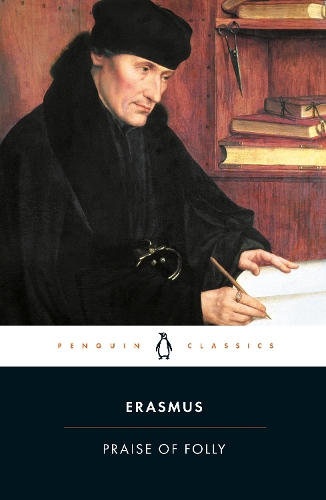
Praise of Folly
paperback | English
Published:
25 November, 1993
paperback | English
Published:
25 November, 1993

Standard worldwide delivery by
Mon, June 22 - Thu, June 25
Order within
0
Popular Books by Desiderius Erasmus
View All Books by Desiderius Erasmus

Description
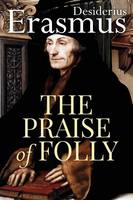
Erasmus of Rotterdam (c. 1466-1536) is one of the greatest figures of the Renaissance humanist movement, which abandoned medieval pieties in favour of a rich new vision of the individual's potential. Praise of Folly, written to amuse his friend Sir Thomas More, is Erasmus's best-known work. Its dazzling mixture of fantasy and satire is narrated by a personification of Folly, dressed as a jester, who celebrates youth, pleasure, drunkenness and sexual desire, and goes on to lambast human pretensions, foibles and frailties, to mock theologians and monks and to praise the 'folly' of simple Christian piety. Erasmus's wit, wordplay and wisdom made the book an instant success, but it also attracted what may have been sales-boosting criticism. The Letter to Maarten van Dorp, which is a defence of his ideas and methods, is also included.
More Details
| Type | Book |
|---|---|
| ISBN13 | 9780140446081 |
| ISBN10 | 0140446087 |
| Number Of Pages | 256 |
| Item Weight | 193 g |
| Product Dimensions | 129 x 197 x 14 mm |
| Publisher / Reseller | Penguin Books Ltd |
| Format | paperback |
See More +
Author's Bio
Desiderius Erasmus, born about 1469, went to school at Gouda, Utrecht and Deventer. He became the most famous humanist of the Northern Renaissance. Erasmus travelled widely, and his thought was particularly influential in England, where he became a close friend of Thomas More. He died in Basle in 1536.
Betty Radice became joint editor of the Penguin Classics in 1964, and translated from the Latin, Greek and Italian. She was an honorary fellow of St Hilda's College, Oxford. She died in 1983.
A.H.T. Levi was Buchanan Professor of French Language and Literature at the University of St Andrews and has published extensively on the Renaissance.